很多面向对象语言都支持接口继承和实现继承。前者只继承方法签名,后者继承实际的方法。
ECMAScript 中的函数没有签名,所以只支持实现继承,并且通过原型链实现。
原型链
原型链的基本思想是通过原型继承多个引用类型的属性和方法,在实例和原型之间构造一条原型链
1
2
3
4
5
6
7
8
9
10
11
12
13
14
15
16
17
18
19
20
21
22
23
24
25
26
27
| function SuperType() {
this.property = true;
}
SuperType.prototype.getSuperValue = function () {
return this.property;
};
function SubType() {
this.subproperty = false;
}
SubType.prototype = new SuperType();
SubType.prototype.getSubValue = function () {
return this.subproperty;
};
let instance = new SubType();
console.log(instance.getSuperValue());
|
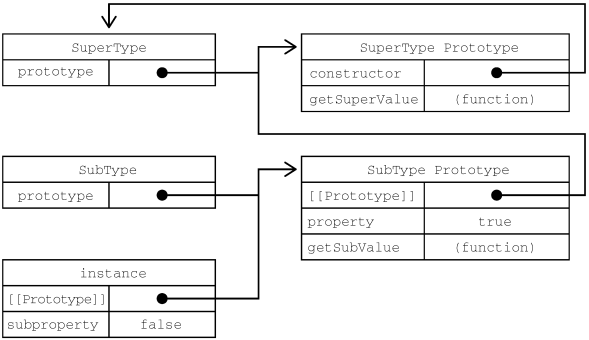
在读取实例上的属性时,首先在实例上搜索这个属性。如果没找到,则会继承搜索实例的原型
通过原型链实现继承后,可以继承向上搜索,搜索原型的原型
对属性和方法的搜索会一直持续到原型链的末端
调用 instance.getSuperValue() 的搜索过程:
instance -> SubType.prototype -> SuperType.prototype -> SuperType.getSuperValue()
默认原型
默认情况下,所有引用类型都继承自 Object
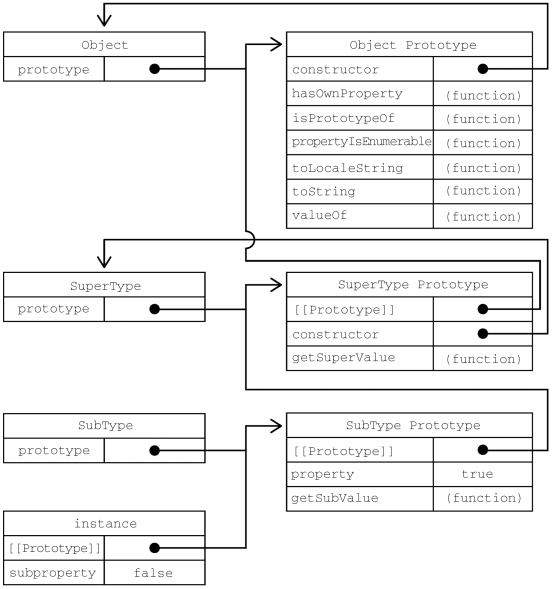
调用 instance.toString() 时,实际上调用的是保存在 Object.prototype 上的方法
原型与继承关系
接前面代码:
1
2
3
4
5
6
7
| console.log(instance instanceof Object);
console.log(instance instanceof SuperType);
console.log(instance instanceof SubType);
console.log(Object.prototype.isPrototypeOf(instance));
console.log(SuperType.prototype.isPrototypeOf(instance));
console.log(SubType.prototype.isPrototypeOf(instance));
|
方法
子类覆盖父类的方法,或者增加父类没有的方法必须在原型赋值之后再加到原型上
以对象字面量方式创建原型方法会破坏之前的原型链
1
2
3
4
5
6
7
8
9
10
11
12
13
14
15
16
17
18
19
20
21
22
23
24
25
26
27
28
29
30
31
32
33
34
35
36
37
38
39
40
41
42
43
44
45
| function SuperType() {
this.property = true;
}
SuperType.prototype.getSuperValue = function() {
return this.property;
};
function SubType() {
this.subproperty = false;
}
SubType.prototype = new SuperType();
SubType.prototype = {
getSubValue() {
return this.subproperty;
},
someOtherMethod() {
return false;
}
};
let instance = new SubType();
console.log(instance.getSuperValue());
|
以对象字面量覆盖后的原型是一个 Object 的实例,不再是 SuperType 的实例。之前的原型链断开,SubType 和 SuperType 之间没关系了
原型链的问题
盗用构造函数
为解决原型包含引用值导致的继承问题,在子类构造函数中调用父类构造函数,使用 apply() 和 call() 方法以新创建的对象为上下文执行构造函数
1
2
3
4
5
6
7
8
9
10
11
12
13
14
15
16
17
18
19
20
21
22
| function SuperType() {
this.colors = ["red", "blue", "green"];
}
function SubType() {
SuperType.call(this);
}
let instance1 = new SubType();
instance1.colors.push("black");
console.log(instance1.colors);
let instance2 = new SubType();
console.log(instance2.colors);
|
传递参数
盗用构造函数可以在子类构造函数中向父类构造函数传参
1
2
3
4
5
6
7
8
9
10
11
12
13
14
15
16
17
| function SuperType(name) {
this.name = name;
}
function SubType() {
SuperType.call(this, "Nicholas");
this.age = 29;
}
let instance = new SubType();
console.log(instance.name);
console.log(instance.age);
|
盗用构造函数的问题
组合继承
组合继承综合了原型链和盗用构造函数,使用原型链继承原型上的属性和方法(共享原型方法),通过盗用构造函数继承实例属性(避免引用值共享)。既可以把方法定义在原型上实现重用,又可以让每个实例都有自己的属性。
1
2
3
4
5
6
7
8
9
10
11
12
13
14
15
16
17
18
19
20
21
22
23
24
25
26
27
28
29
30
31
32
33
34
35
36
37
38
39
40
41
42
43
44
45
46
47
48
49
50
51
52
53
54
55
56
57
| function SuperType(name) {
this.name = name;
this.colors = ["red", "blue", "green"];
}
SuperType.prototype.sayName = function() {
console.log(this.name);
};
function SubType(name, age) {
SuperType.call(this, name);
this.age = age;
}
SubType.prototype = new SuperType();
SubType.prototype.sayAge = function() {
console.log(this.age);
};
let instance1 = new SubType("Nicholas", 29);
instance1.colors.push("black");
console.log(instance1.colors);
instance1.sayName();
instance1.sayAge();
console.log(instance1);
console.log(SubType.prototype);
let instance2 = new SubType("Greg", 27);
console.log(instance2.colors);
instance2.sayName();
instance2.sayAge();
|
组合继承是 JavaScript 中使用最多的继承模式
组合继承保留了 instanceof 操作符和 isPrototypeOf() 方法识别合成对象的能力
但是,组合继承存在效率问题,父类构造函数始终会被调用两次:
在创建子类原型时调用一次
在子类构造函数中调用一次
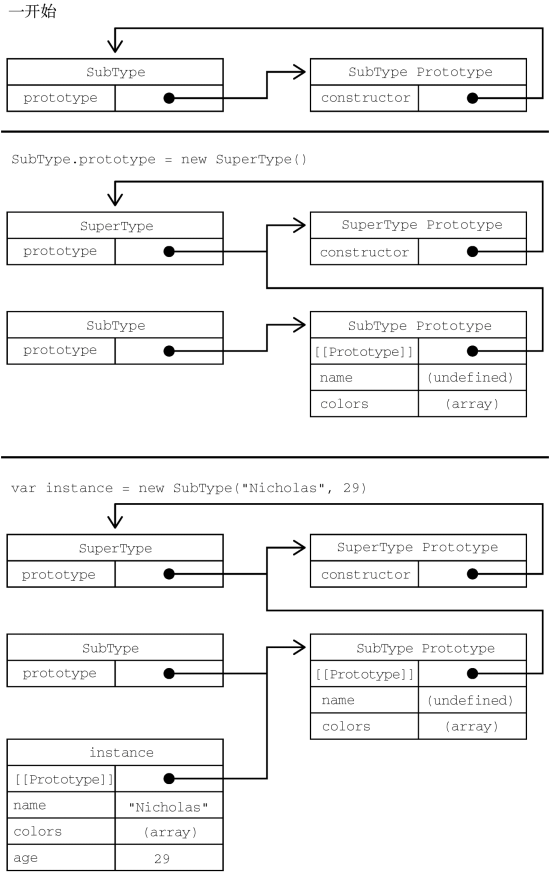
由于调用了两次 SuperType 构造函数,所以有两组 name 和 colors 属性:一组在实例上,另一组在 SubType 的原型上
原型式继承
原型式继承适用于:
1
2
3
4
5
6
7
8
9
10
11
12
13
14
15
16
17
18
19
20
21
22
23
24
25
26
27
28
29
30
31
32
33
34
35
36
37
38
39
40
41
42
43
44
45
|
let person = {
name: "Nicholas",
friends: ["Shelby", "Court", "Van"]
};
let anotherPerson = Object.create(person);
anotherPerson.name = "Greg";
anotherPerson.friends.push("Rob");
let yetAnotherPerson = Object.create(person);
yetAnotherPerson.name = "Linda";
yetAnotherPerson.friends.push("Barbie");
console.log(person.friends);
|
寄生式继承
寄生式继承类似寄生构造函数和工厂模式:创建一个实现继承的函数,以某种方式增强对象,然后返回这个对象
1
2
3
4
5
6
7
8
9
10
11
12
13
14
15
16
17
18
19
20
21
22
23
24
25
26
27
28
29
30
|
function object(o) {
function F() {}
F.prototype = o;
return new F();
}
function createAnother(original) {
let clone = object(original);
clone.sayHi = function() {
console.log("hi");
};
return clone;
}
let person = {
name: "Nicholas",
friends: ["Shelby", "Court", "Van"]
};
let anotherPerson = createAnother(person);
anotherPerson.sayHi();
|
寄生式继承适合主要关注对象,不在乎类型和构造函数的场景
通过寄生式继承给对象添加函数会导致函数难以重用
寄生式组合继承
寄生式组合继承通过盗用构造函数继承属性,但使用混合式原型链继承方法(使用寄生式继承来继承父类原型,然后将返回的新对象赋值给子类原型)解决组合继承的效率问题。
1
2
3
4
5
6
7
8
9
10
11
12
13
14
15
16
17
18
19
20
21
22
23
24
25
26
27
28
29
30
31
32
33
34
35
36
37
38
39
40
41
42
43
44
45
46
47
48
49
50
51
52
53
54
55
56
57
58
| function object(o) {
function F() {}
F.prototype = o;
return new F();
}
function inheritPrototype(subType, superType) {
let prototype = object(superType.prototype);
prototype.constructor = subType;
subType.prototype = prototype;
}
function SuperType(name) {
this.name = name;
this.colors = ["red", "blue", "green"];
}
SuperType.prototype.sayName = function() {
console.log(this.name);
};
function SubType(name, age) {
SuperType.call(this, name);
this.age = age;
}
inheritPrototype(SubType, SuperType);
SubType.prototype.sayAge = function () {
console.log(this.age);
};
let instance = new SubType("Nicholas", 29);
console.log(instance);
console.log(SubType.prototype);
|
使用寄生式组合继承原型链保持不变,instanceof() 和 isPrototypeOf() 正常有效
寄生式组合继承是引用类型继承的最佳模式